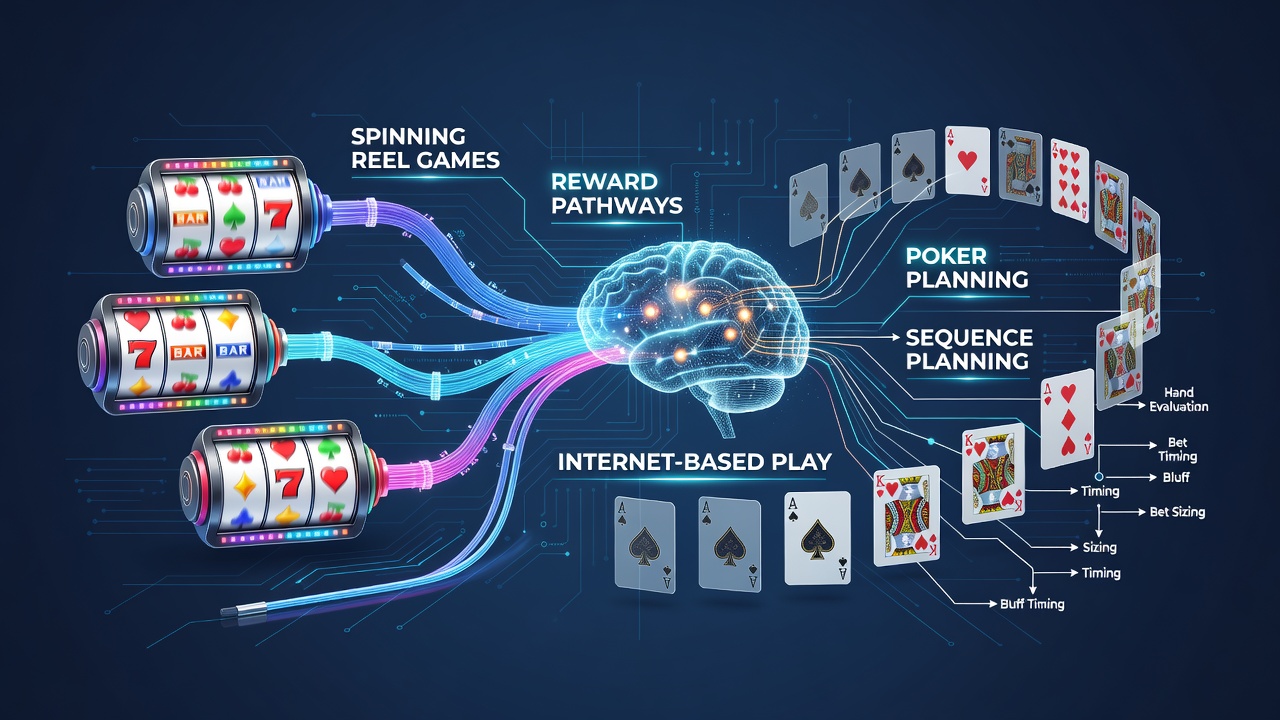
Reward Pathways in Spinning Reel Games Linked to Strategic Planning in Online Poker
Spinning reel games operate on variable ratio reinforcement schedules that trigger dopamine responses in the brain's mesolimbic pathway, and these same neural mechanisms influence how players approach sequence planning during online poker sessions. Researchers have documented how near-miss outcomes in reel spins activate the nucleus accumbens similarly to the calculated risk assessments required when players evaluate betting sequences in poker variants.
Data from multiple studies indicate that players who engage regularly with spinning reel mechanics demonstrate measurable shifts in decision-making patterns when they transition to poker tables. The anticipation built through reel spins creates conditioned responses that carry over into poker environments where sequence planning demands attention to pot odds, position, and opponent tendencies. Observers note that June 2026 platform analytics reveal increased session durations among users who alternate between these game types within single login periods.
Neural Activation Patterns in Reel-Based Gaming
The spinning reel format delivers outcomes through random number generators calibrated to specific payout percentages, yet the brain interprets these results through reward prediction error signals. When symbols align in partial sequences, the anterior cingulate cortex registers the discrepancy between expected and actual results, which sustains engagement across multiple spins. Studies conducted at research institutions in Canada and Australia have mapped these activations using functional imaging techniques, showing consistent involvement of the ventral tegmental area regardless of geographic player pools.
Internet-based platforms record higher repeat engagement rates when reel games incorporate progressive elements that extend reward anticipation across sessions. This pattern aligns with findings that link prolonged exposure to such mechanics with altered timing in subsequent strategic choices during poker play. Figures from European gambling research consortia show that users exposed to frequent near-miss configurations in reels tend to extend their pre-flop decision windows when seated at virtual poker tables.
Transfer Effects to Poker Sequence Planning
Sequence planning in online poker requires integration of probabilistic calculations with real-time adjustments based on observed actions. The same reward circuitry engaged during reel spins appears to modulate risk tolerance when players construct betting lines or decide on continuation bets. Academic papers published through university psychology departments document correlations between reel game frequency and changes in fold equity assessments among regular online participants.
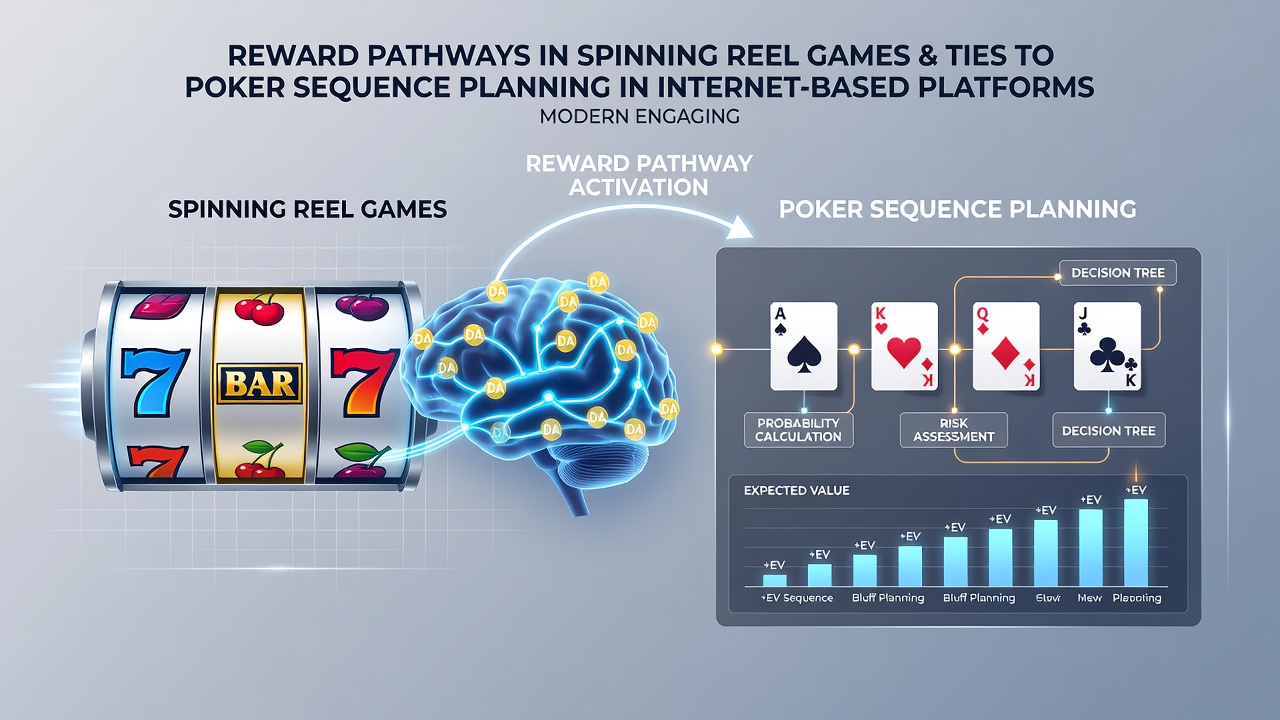
One longitudinal analysis tracked participants across both game categories and found that individuals who logged substantial reel spin hours exhibited faster processing of multi-street scenarios in poker. The variable reinforcement experienced in spinning reels appears to prime the brain for handling the intermittent rewards characteristic of successful poker sequences, where positive outcomes arrive unpredictably across hands. Regulatory reports from Nevada and New Jersey gaming authorities note parallel increases in cross-game participation during periods when reel titles feature enhanced bonus rounds.
Platform Data and Behavioral Metrics
Online operators compile extensive logs that connect reel session metrics with poker table selections. Analysis of these records shows that players who trigger bonus features in spinning reels frequently follow with extended time at poker tables featuring structured hand ranges. Research indicates this sequencing reflects carryover from heightened arousal states rather than deliberate strategy shifts. As of June 2026, aggregated data across multiple jurisdictions continue to highlight these transitions without establishing direct causation.
Industry organizations tracking responsible gaming practices have incorporated these observations into educational materials distributed to operators. The focus remains on presenting factual patterns observed in player behavior logs rather than prescriptive interpretations. Those who study digital gambling environments report that sequence planning proficiency in poker develops alongside exposure to reel reward structures, though individual variation remains substantial across demographic groups.
Conclusion
Current evidence connects reward pathway activation in spinning reel games with measurable influences on sequence planning during internet poker sessions. Platform records and neuroimaging studies together illustrate how variable reinforcement schedules shape decision timing and risk evaluation across both formats. Continued monitoring through June 2026 and beyond will provide additional datasets for researchers examining these intersections in online environments.